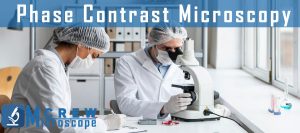
Phase-contrast microscopy is among the oldest and the easiest methods to enlarge biological specimens. Dutch Scientist Frits Zernike first introduced it in the 1930s. He proposed that one can utilize the contrast-enhancing technique to develop a relatively higher contrast image of the set specimen. Typically, biologists use this unique microscopy to analyze living cells, thin tissues, microorganisms, organelles, glass fragments, fibers, and much … [Read more...]
How does a Compound Microscope Work
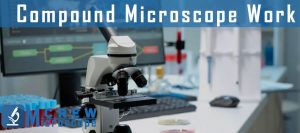
Compound microscopes are the most widely used microscopes commonly seen in school and research labs. They are utilized for observing and identifying cells and tissues because of their high magnification and lower costs. They provide better magnification than a stereomicroscope cost less than the electron microscope, making compound microscopes ideal for learning and research. If you are keen on microscopes, let is tell you about the structure and … [Read more...]
What Type of Microscope is Needed to See Ribosomes and Mitochondria

While the visible eye may see the human body as a combination of skin, muscles, eyes, mouth, nose, arms, legs, and a few more organs, it is a lot more than that. The human body is made of a number of tiny cells that are as small as 100 microns. You might wonder if we can see the cells with the naked eye, we cannot. Cells are microscopic and can only be seen under microscopes. With various kinds of microscopes present, light microscopes, … [Read more...]
Light Microscope vs Compound Microscope

Light microscopes and compound microscopes are often used interchangeably. However, what if we tell you they are not entirely the same? Light microscopes comprise all microscopes that use a light source to illuminate an object. On the contrary, compound microscopes are used to observe biological and microbiological samples. You may say that all compound microscopes are light microscopes, but all light microscopes are not compound … [Read more...]
How to Clean Microscope Slides
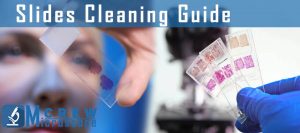
A scientist cannot manipulate the quantity of grime that accumulates on lab equipment. Cleansing strategies range greatly depending on the chemical substances which might be gifted to a chunk of the system and the way it's far being utilized. Over-cleaning rather than beneath cleansing is an excellent rule of thumb. However, ensure that any cleansing chemical substances do not interfere with future experiments utilizing the cleaned equipment. … [Read more...]